

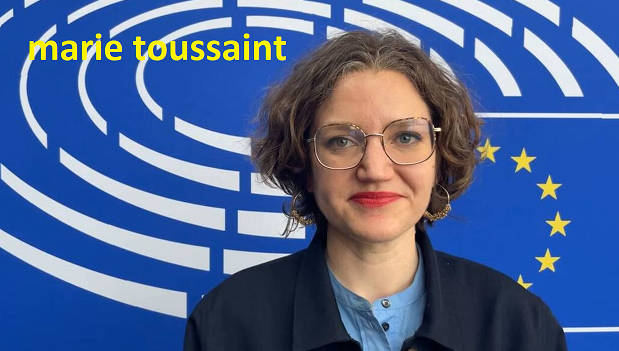
Who Is Marie Toussaint and Why Her Name Matters
Marie Toussaint is widely recognized as a leading advocate for immigrant rights, particularly in the United States, where debates around immigration, asylum, and border policy remain deeply complex and emotionally charged. Her name has become closely associated with faith-driven activism, humanitarian values, and a strong moral stance on protecting vulnerable communities. Unlike many figures who approach immigration strictly from a political or legal angle, Marie Toussaint brings a human-centered perspective that resonates with both advocates and everyday citizens.
What sets Marie Toussaint apart is her ability to speak across divides. She engages policymakers, faith leaders, and the general public using language that is compassionate yet firm, moral yet practical. This balance has allowed her to gain credibility in spaces that often resist change. Over time, her work has helped reframe immigration not just as a policy issue, but as a matter of human dignity and shared responsibility.
Her growing influence is also tied to the consistency of her message. Rather than chasing trends or reacting emotionally to news cycles, Marie Toussaint focuses on long-term solutions rooted in justice, empathy, and accountability. This steady approach has made her a trusted voice in discussions where clarity and moral grounding are often missing.
Marie Toussaint’s Role in Immigration Advocacy
At the core of Marie Toussaint’s work is her leadership within immigration advocacy organizations, where she has played a critical role in shaping national conversations. She has been involved in efforts to protect asylum seekers, challenge harmful detention practices, and push back against policies that separate families. Her advocacy is not abstract; it is grounded in real stories of people affected by immigration systems every day.
Marie Toussaint often emphasizes that immigration policies do not exist in a vacuum. She connects enforcement decisions to their real-world consequences, highlighting how laws impact children, parents, and entire communities. This approach helps audiences understand that behind every statistic is a human life, which shifts how people think about enforcement and reform.
Another key aspect of her advocacy is coalition-building. Marie Toussaint works alongside faith groups, legal experts, and grassroots organizers to amplify collective impact. By bringing diverse voices together, she strengthens movements that might otherwise remain fragmented. This ability to unite people around shared values has become one of her most effective tools for change.
Faith, Morality, and Leadership in Marie Toussaint’s Work

Faith plays a central role in Marie Toussaint’s leadership style, but not in a way that excludes or alienates others. Instead, she uses faith as a moral framework to argue for compassion, hospitality, and justice. Her message often draws on ethical principles that resonate beyond any single religious tradition, making her advocacy accessible to a broad audience.
Marie Toussaint frequently speaks about moral responsibility, especially when addressing leaders in positions of power. She challenges them to consider not only what is legal, but what is right. This distinction is crucial in debates where laws may lag behind evolving standards of human rights. Her moral clarity often cuts through political noise and forces difficult but necessary conversations.
Her leadership also reflects humility and service. Rather than positioning herself as the center of the movement, Marie Toussaint consistently uplifts the voices of immigrants and refugees themselves. This approach builds trust and reinforces the idea that effective leadership is about listening as much as it is about speaking.
The Broader Impact and Legacy of Marie Toussaint
The impact of Marie Toussaint’s work extends beyond immediate policy debates. She has helped shape how immigration is discussed in public spaces, moving conversations away from fear-based narratives toward more humane and fact-based understanding. This cultural shift is subtle but powerful, influencing how communities respond to newcomers.
Over time, her advocacy has also inspired a new generation of leaders. Many young activists look to Marie Toussaint as an example of how to combine conviction with compassion. Her career shows that it is possible to remain principled while navigating difficult political realities, a lesson that is especially valuable in today’s polarized environment.
As her work continues, Marie Toussaint’s legacy is likely to be defined not just by specific policy wins, but by the values she has consistently upheld. By centering dignity, faith-informed ethics, and collaboration, she has left a lasting mark on immigration advocacy. Her name now represents more than an individual—it symbolizes a movement toward justice that prioritizes humanity above all else.
